

How to order bulk coffee: a UK guide to quality
TL;DR:
- Proper assessment of coffee needs and equipment ensures quality and reduces waste.
- Choosing a flexible, roast-to-order supplier with quick delivery maintains freshness.
- Correct storage and inspection after delivery preserve coffee flavour and prevent staleness.
Keeping staff and guests consistently happy with great coffee is harder than it looks. Many UK organisations place bulk orders based on price alone, only to find the coffee arrives stale, mismatched to their equipment, or in quantities that run out mid-week. Getting bulk coffee right requires preparation, supplier research, and a clear process from start to finish. This guide covers every stage, from calculating your actual needs to inspecting deliveries and storing beans correctly, so your next bulk order delivers quality and reliability every time.
Table of Contents
- Assessing your bulk coffee needs
- How to choose the right supplier
- Placing your bulk coffee order: step-by-step
- Quality control and storage after delivery
- An expert's view: why freshness and flexibility matter most
- Bulk coffee made simple with Coffee Factory
- Frequently asked questions
Key Takeaways
| Point | Details |
|---|---|
| Clarify requirements first | Knowing your business's exact coffee needs prevents both waste and disappointment. |
| Prioritise freshness over price | Choosing roast-to-order and fast delivery will ensure better taste and satisfaction. |
| Choose flexible suppliers | Work with suppliers who adapt to changing needs and market volatility. |
| Check and store properly | Inspect all delivered coffee and use proper storage to maintain quality. |
Assessing your bulk coffee needs
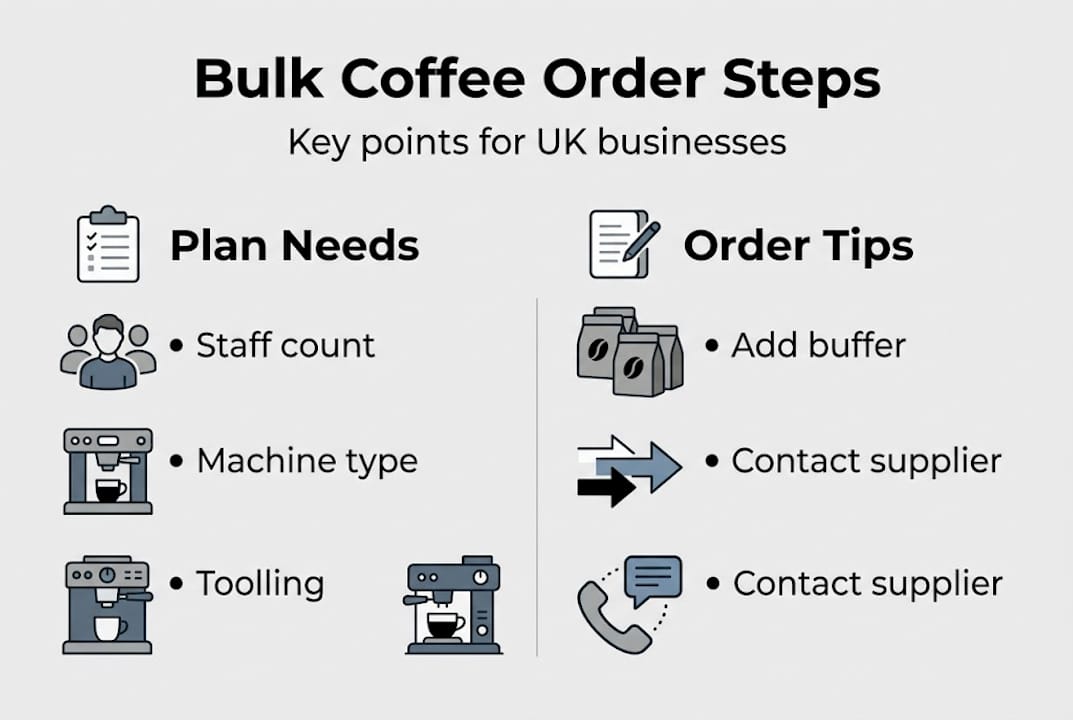
To start any bulk coffee order successfully, you first need clarity on what your business actually needs. Businesses often overlook consumption patterns when ordering, which leads to either running short or accumulating stock that goes stale before it can be used. Both outcomes cost money and affect satisfaction.
Begin by tracking how much coffee your team actually consumes. Count cups per person per day, factor in guest and client usage, and account for any events or seasonal peaks. A medium-sized office of 30 staff might consume between 60 and 120 cups daily depending on coffee culture. That translates to roughly 1 to 2 kg of ground coffee per day, or 5 to 10 kg per working week.
Key information to gather before ordering:
- Average daily and weekly coffee consumption by department or location
- Preferred roast profiles: light, medium, or dark
- Format required: whole beans, pre-ground, pods, or a mix
- Decaf requirements and any specialist blends needed
- Brewing equipment in use: espresso machine, filter, cafetière, or bean-to-cup
- Grind size compatibility with existing equipment
Equipment type matters more than most organisations realise. A filter machine requires a coarser grind than an espresso setup. Ordering the wrong grind wastes the entire batch. Review the business coffee supply basics before finalising your requirements to avoid common specification errors.
| Consumption scenario | Daily cups | Weekly coffee (approx.) |
|---|---|---|
| Small office (10 staff) | 20 to 40 | 1 to 2 kg |
| Medium office (30 staff) | 60 to 120 | 3 to 6 kg |
| Large office (80+ staff) | 160 to 320 | 8 to 16 kg |
| Corporate event (200 guests) | 200 to 400 | 10 to 20 kg |
Pro Tip: Add a 15 to 20 per cent buffer to your calculated quantity. Demand spikes unexpectedly, especially around meetings, client visits, or seasonal periods.
Once you have these figures, you are in a much stronger position to approach suppliers with specific, confident requirements rather than vague requests.
How to choose the right supplier
With your coffee requirements listed, the next challenge is zeroing in on a supplier who can deliver what you need, when and how you need it. Not all bulk coffee suppliers operate the same way, and the differences matter significantly for quality and reliability.
The most important factor is freshness. Roast-to-order and quick delivery prevent staleness, and flexibility is key in volatile markets. A supplier roasting coffee weeks before despatch is a risk. Look for UK roasters who roast after your order is placed, not before.
What to look for in a bulk coffee supplier:
- Roast-to-order capability with clear roast dates on packaging
- Delivery lead times of 1 to 3 business days
- Flexible order quantities with no excessive minimum order requirements
- Range of roast profiles, origins, and grind options
- Clear labelling and product information
- Responsive customer support for business accounts
- Transparent pricing with no hidden fees
When choosing coffee beans for a business setting, consider consistency above all. A single-origin coffee may be exceptional but can vary between harvests. A well-crafted blend tends to deliver more consistent flavour across orders, which matters when you are serving the same team or clients regularly.
| Supplier factor | Why it matters |
|---|---|
| Roast-to-order | Ensures maximum freshness on arrival |
| Fast delivery | Reduces storage time and stock risk |
| Flexible quantities | Matches actual demand without waste |
| Customisation options | Grind, blend, and packaging to your spec |
| Business account support | Easier reordering and issue resolution |
Use a coffee supplier checklist to compare shortlisted suppliers side by side. Request references from other business clients if possible, and check reviews specifically from commercial buyers rather than individual consumers.
Pro Tip: Ask each supplier directly: "How many days after roasting does my order typically arrive?" The answer reveals a great deal about their commitment to freshness.
Placing your bulk coffee order: step-by-step
Once you have chosen your best-fit supplier, it is time to put your plan into action. A structured approach avoids errors, delays, and the frustration of receiving the wrong product.
Follow these steps to keep the process smooth:
- Compile your order specification. Include quantity in kilograms, roast profile, grind type, packaging preference, and any labelling requirements.
- Contact shortlisted suppliers. Request a formal quote based on your specification. Ask about sample availability before committing to a large order.
- Review the quote carefully. Check unit price, delivery cost, lead time, and payment terms. Confirm the roast date policy.
- Request samples if ordering a new product. Many suppliers provide taster quantities for business accounts. Use this to verify flavour and grind suitability before full commitment.
- Confirm all product details in writing. Grind size, roast profile, quantity, and packaging must be confirmed before payment.
- Place the order and request written confirmation. A confirmation email with order reference, expected despatch date, and delivery window is standard practice.
- Arrange delivery receipt. Ensure someone is available to receive and inspect the delivery on the expected date.
- Store immediately on arrival. Do not leave coffee in delivery packaging longer than necessary.
"Clarity at the order stage prevents the majority of bulk coffee delivery problems. Confirm every detail in writing before payment is made."
For practical guidance on ordering premium coffee online in the UK, review supplier-specific instructions before placing your first order with a new provider. If your office uses pod machines, check compatibility carefully. Not all strong coffee pods are compatible with every machine format, and bulk pod orders carry higher waste risk if the fit is wrong.
Pro Tip: Set a recurring calendar reminder for reordering. Running out of coffee mid-week is avoidable with a simple stock review schedule.
Quality control and storage after delivery
After your delivery arrives, maintaining coffee quality is down to storage and proactive checks. Even the freshest roasted beans deteriorate quickly if handled incorrectly after arrival.
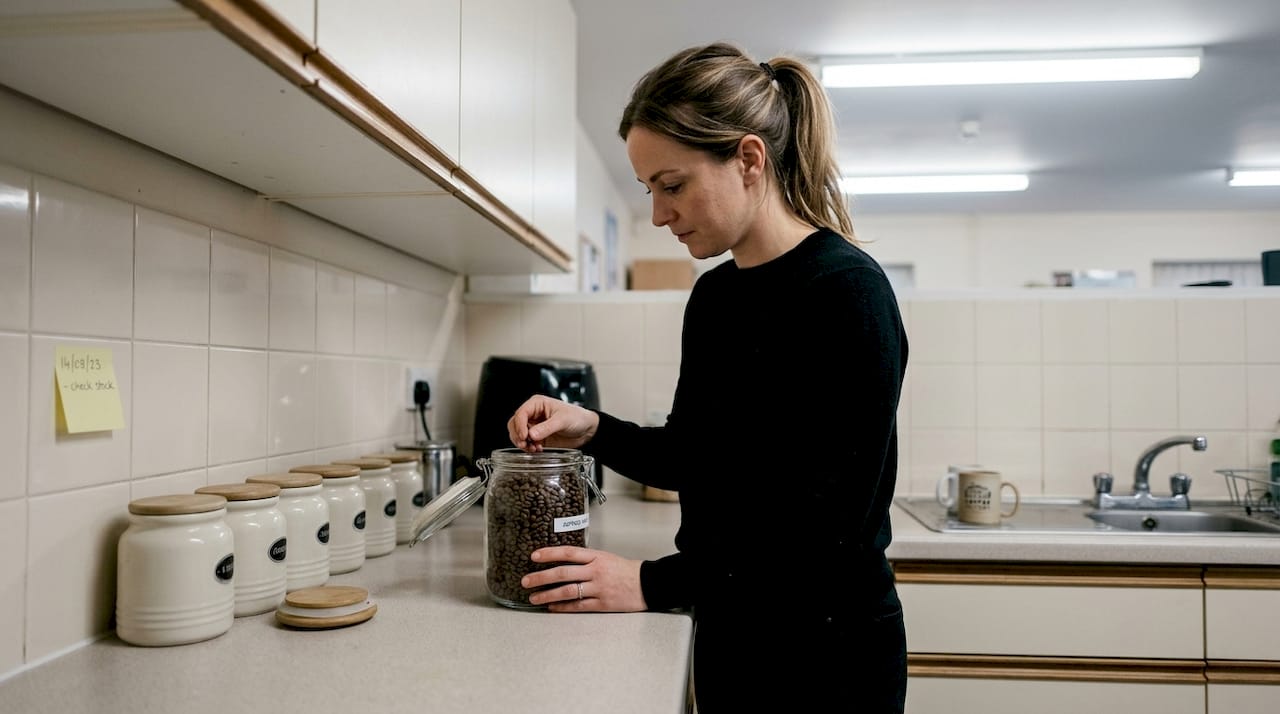
Freshness should be the number one priority, and proper storage is crucial to preserving it. The main enemies of fresh coffee are oxygen, moisture, heat, and light. All four accelerate staleness and flavour loss.
Delivery inspection checklist:
- Check the roast date on every bag or unit. Reject any product roasted more than four weeks prior without prior agreement.
- Inspect packaging integrity. Damaged seals or torn bags compromise freshness immediately.
- Verify quantity against the order confirmation.
- Check grind type and roast profile match what was ordered.
- Note any damage to outer packaging and photograph it before signing the delivery receipt.
"Coffee stored correctly in airtight containers, away from heat and light, retains peak flavour significantly longer than coffee left in open or inadequate packaging."
For storing bulk coffee correctly in an office or event setting, use airtight containers with one-way degassing valves where possible. Divide large quantities into smaller portions so that only the working supply is opened at any time. Keep the remainder sealed.
Rotate stock consistently. Always use the oldest roasted beans first. Label containers with the roast date to make rotation straightforward. Understanding the broader coffee supply chain basics helps you appreciate why roast date matters at every stage, from roastery to cup.
If coffee starts tasting flat, sour, or papery, act quickly. Contact your supplier, document the issue, and request a replacement or credit. Good suppliers respond promptly to quality concerns from business accounts.
UK bulk coffee pricing guide 2026
Understanding realistic price ranges prevents budget surprises and helps you evaluate supplier quotes with confidence. UK bulk coffee pricing varies based on origin, roast profile, certification, and volume, but the following reference points reflect 2026 market conditions for roasted coffee delivered to UK businesses.
| Coffee type | Price range per kg (2026) | Typical minimum order | Best suited for |
|---|---|---|---|
| Commercial blend, warehouse stock | £12 to £18 per kg | 5 to 10 kg | High-volume, price-sensitive settings |
| Specialty blend, roast-to-order | £18 to £28 per kg | 1 to 2 kg | Offices and hospitality prioritising quality |
| Fairtrade and Organic certified | £20 to £32 per kg | 2 to 5 kg | Sustainability-conscious organisations |
| Single origin specialty | £25 to £48 per kg | 500 g to 1 kg | Client hospitality, events, premium workplace experience |
Cost per cup is a more useful metric than price per kilogram when presenting the business case for quality coffee. A specialty blend at £22 per kg yields different costs depending on brewing method:
| Brewing method | Dose per cup | Cups per kg | Ingredient cost per cup (at £22/kg) |
|---|---|---|---|
| Espresso-based (double shot) | 18 g | ~55 | ~40p |
| Bean-to-cup machine | 14 g average | ~71 | ~31p |
| Filter coffee | 12 g per 200 ml | ~83 | ~26p |
| Cafetière | 10 g per cup | ~100 | ~22p |
These ingredient costs are modest relative to the value coffee provides in a workplace or client-facing setting. Moving from a commercial blend at £15 per kg to a roast-to-order specialty blend at £23 per kg adds approximately 10 to 12 pence per cup — an investment that directly affects daily staff experience and the impression made on visitors.
Volume discounts typically apply from 10 kg upward with most UK roasters, with more meaningful reductions at 25 kg and 50 kg thresholds. Monthly standing orders often attract 5 to 10 per cent savings compared to ad-hoc purchases. When negotiating volume pricing, confirm that freshness guarantees remain in place — a lower per-kilogram rate is only valuable if roast-to-order scheduling is maintained within the agreed delivery cadence. Explore coffee by the kilo for transparent bulk pricing from Coffee Factory's Devon roastery.
An expert's view: why freshness and flexibility matter most
Beyond the practical steps, here is what industry insiders wish more UK organisations prioritised in their bulk coffee orders.
Most businesses focus on unit price. That is understandable, but it is often the wrong primary metric. Freshness is more valuable than chasing the lowest price. A coffee that costs slightly more but arrives roasted to order will outperform a cheaper product that has sat in a warehouse for six weeks. Staff notice. Clients notice. The difference in satisfaction is real and measurable.
Flexibility in a supplier is equally underrated. Demand fluctuates. Events get added to the calendar at short notice. A supplier who can adjust your order volume with minimal lead time is worth paying a premium for. Understanding what a roastery actually does and how roast-to-order works helps organisations ask better questions and make better supplier choices.
Many UK businesses only improve their coffee culture after a quality-driven review prompted by a complaint or a visible drop in satisfaction. Proactive decisions, choosing freshness and flexibility from the start, consistently deliver better outcomes than reactive ones.
Bulk coffee made simple with Coffee Factory
For UK businesses and organisations, Coffee Factory streamlines bulk ordering and guarantees freshly roasted coffee every time. Based in Devon, Coffee Factory roasts to order and despatches quickly across the UK, making it a practical choice for offices, events, and ongoing supply needs.
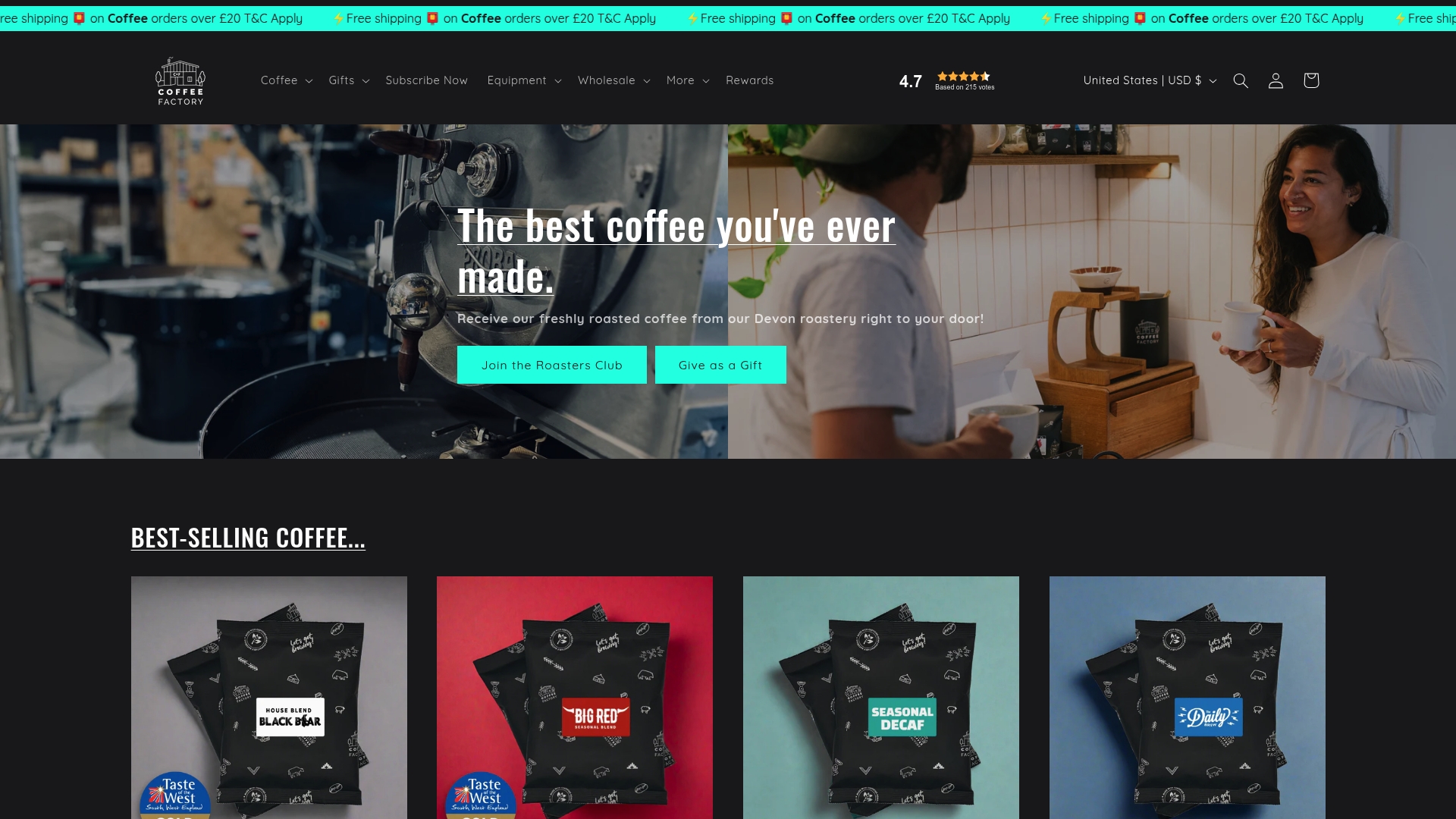
Browse coffee by the kilo for straightforward bulk options, or explore the full range of fresh ground coffee to match your equipment and team preferences. Whether you need a consistent everyday blend or something more specific for a client event, Coffee Factory UK offers the selection and reliability that business buyers require. Free shipping is available on qualifying orders, and the product range covers whole beans, ground options, and multiple roast profiles.
Frequently asked questions
How do I estimate how much coffee my business needs?
Track average daily usage for staff and guests, then multiply by the number of working days and add a buffer for events. Businesses must analyse usage patterns prior to ordering to avoid shortfalls or excess stock.
What's the best way to keep bulk coffee fresh?
Store beans in airtight containers in a cool, dark place and use older beans first to prevent staleness. Proper storage is essential to maintain coffee freshness across large quantities.
How quickly will my bulk coffee be delivered after ordering?
Most reputable UK roasters offer delivery within 1 to 3 business days, especially for roast-to-order bulk purchases. Speedy delivery helps prevent staleness and supports consistent quality for business accounts.
Can I get a sample before making a large order?
Yes, many suppliers allow businesses to sample beans or blends before committing to a bulk order. Sampling is commonly available when ordering premium coffee through business accounts.
Recommended
- How to order premium coffee online in the UK
- What is business coffee supply? A 2026 UK guide
- What is sustainable coffee: a guide for UK enthusiasts
- What is a coffee subscription? Your 2026 guide to better coffee
- Coffee subscriptions
- Specialty coffee trends 2026: UK enthusiasts guide
- What to expect from a monthly coffee subscription: an honest guide
How much you save buying coffee by the kilo
Buying a 1kg bag costs much less than buying the same coffee in four 250g bags. Our house blends, Black Bear, Big Red and Daily Brew, are £31.95 per kilo against £43.80 for four 250g bags, a saving of £11.85 or 27%. Our Seasonal Decaf saves 31%, and our single origins save between 26% and 29%.
Delivery is free on coffee orders over 1kg, and you can mix and match bags to reach it. Order before 9am on a working day and we dispatch the same day.