

Why blooming coffee grounds benefit gardens and the planet
TL;DR:
- Used coffee grounds can be repurposed as a nutrient-rich soil amendment through composting or light surface application. They support soil health, act as natural pest deterrents, and reduce waste when properly managed. Thick layers or improper use may harm plants, so composting first is recommended for best results.
Most coffee drinkers rinse used grounds straight down the sink or toss them in the bin without a second thought. Yet those damp, dark leftovers from your morning brew carry genuine value for your garden, your compost heap, and the wider environment. Understanding how to repurpose spent coffee grounds is one of the simplest steps any UK coffee enthusiast can take toward a more sustainable daily routine. This guide covers what it means to “bloom” coffee grounds for garden use, the science behind their benefits, practical application methods, and some surprising extra uses you may not have considered.
Table of Contents
- What does it mean to bloom coffee grounds?
- The science and sustainability of used coffee grounds
- Best practices: How to use coffee grounds in UK gardens
- Surprising extra uses: Natural pest control and beyond
- A garden enthusiast’s take: The truths (and traps) of blooming coffee grounds
- Get more from your coffee and garden
- Frequently asked questions
Key Takeaways
| Point | Details |
|---|---|
| Nutrient boost for gardens | Coffee grounds add nitrogen and key nutrients to improve UK garden soil when composted properly. |
| Eco-friendly waste solution | Composting grounds diverts waste from landfill and supports UK sustainability efforts. |
| Use with care | Apply grounds in moderation and mostly via compost to prevent harm to plants and pets. |
| Natural pest control option | Used coffee grounds can effectively deter slugs and snails without chemicals. |
What does it mean to bloom coffee grounds?
In brewing, “blooming” refers to the brief pre-infusion step where hot water releases trapped CO₂ from fresh coffee. In sustainability and gardening, the term takes on a different meaning entirely. To “bloom” coffee grounds in this context means to activate and release their latent value, repurposing what looks like waste into a useful garden resource.
Used coffee grounds are not inert. They carry a measurable nutrient profile that makes them genuinely useful for soil and compost. According to expert guidance, used coffee grounds are rich in nitrogen (1 to 2%), phosphorus, potassium, and various micronutrients, with a near-neutral pH of around 6.5 to 6.8. That near-neutral pH is important. Many people assume grounds are strongly acidic, but that is a common misconception addressed later in this guide.
There are two main approaches to using spent grounds in the garden:
- Composting: Adding grounds to a compost heap as a nitrogen-rich “green” material, balanced against carbon-rich “brown” materials like cardboard or dried leaves.
- Direct soil application: Mixing grounds lightly into topsoil or using them as a surface mulch, though this carries more risk if done incorrectly.
Composting is generally the safer and more effective route. Direct application in thick layers can cause problems, which the best practices section covers in detail.
“Used coffee grounds are best composted as a ‘green’ material, kept below 20 to 25% of the total pile, to maximise their nutrient contribution without disrupting the compost balance.”
For anyone interested in the broader picture of sustainable coffee in the UK, repurposing grounds is one practical piece of a larger puzzle. It connects everyday coffee habits to genuine environmental action, without requiring any specialist equipment or significant effort.
The key takeaway: blooming coffee grounds for garden use means choosing to activate their value rather than discard it. It is a straightforward habit shift with measurable benefits for soil health, waste reduction, and garden productivity.
The science and sustainability of used coffee grounds
Coffee grounds contribute to garden soil in several measurable ways. The table below summarises their key nutrients and the specific benefits each one delivers.
| Nutrient | Approximate content | Garden benefit |
|---|---|---|
| Nitrogen | 1 to 2% | Supports leafy growth, feeds soil microbes |
| Phosphorus | Trace amounts | Aids root development and flowering |
| Potassium | Trace amounts | Improves disease resistance and water uptake |
| Magnesium | Trace amounts | Supports chlorophyll production |
Beyond individual nutrients, grounds improve overall soil structure. Composting grounds improves water retention and creates better conditions for acid-loving plants like blueberries and roses once fully broken down through composting. The microbial boost is particularly valuable. Grounds feed the bacteria and fungi that make nutrients available to plant roots, essentially making the whole soil ecosystem more active.
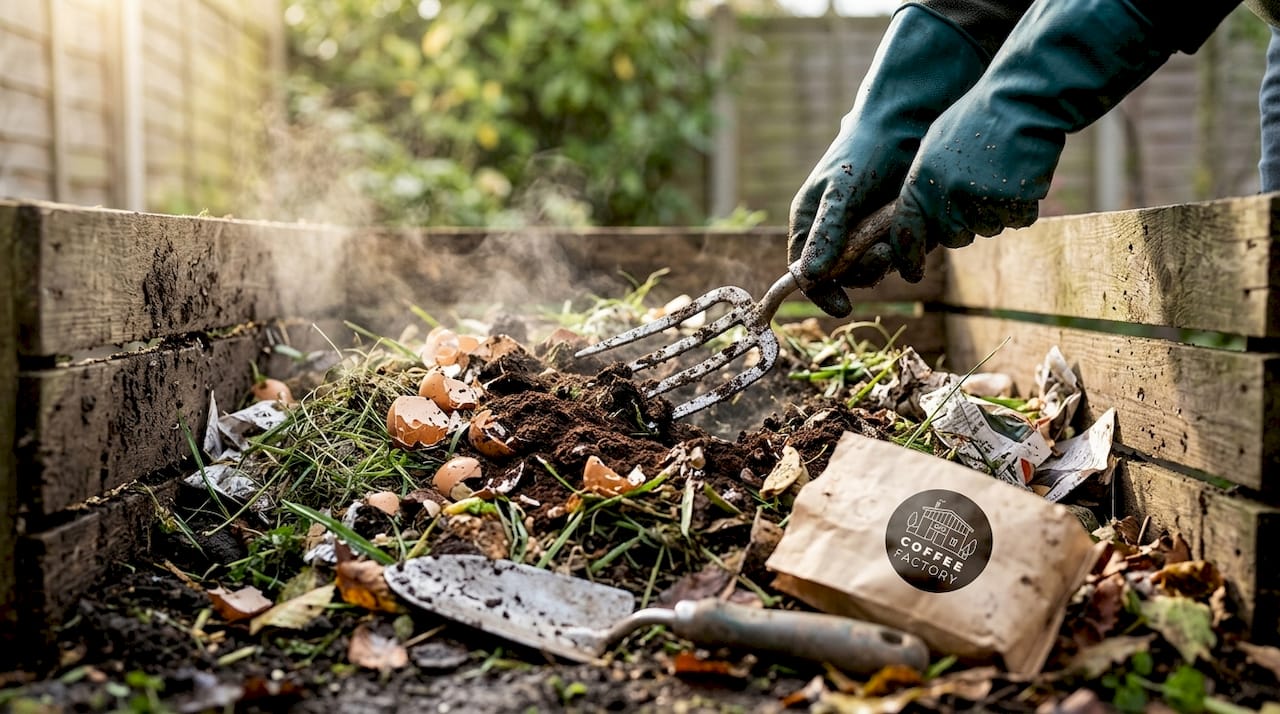
The carbon-to-nitrogen ratio (C:N ratio) matters in compost science. Grounds are nitrogen-heavy, so they work best when balanced with carbon-rich materials. A well-balanced heap breaks down faster and produces richer compost.
UK coffee waste context: The UK produces around 500,000 tonnes of coffee grounds annually, the vast majority of which ends up in landfill. Diverting even a small fraction through home composting or community schemes makes a tangible difference.
Pro Tip: Contact local cafes or coffee shops about collecting their used grounds. Many are happy to give them away for free, and a single busy café can produce several kilograms of grounds per day, enough to significantly boost a home compost heap.
For context on how packaging choices connect to sustainability, it is worth reading about recyclable vs compostable coffee packaging and exploring eco-friendly coffee bags as part of a wider low-waste approach to coffee consumption.
The science is clear. Used coffee grounds are a resource, not a waste product. The question is simply how to use them correctly.
Best practices: How to use coffee grounds in UK gardens
Knowing that grounds are beneficial is one thing. Using them correctly is another. Follow these steps to get the best results without causing harm to your plants or soil.
- Collect and dry grounds lightly. Wet grounds clump together and can go mouldy quickly. Spread them on a tray for a few hours before storing or adding to compost.
- Add to compost as a green layer. Mix grounds into your compost heap alongside brown materials. Turn the heap regularly to prevent compaction.
- Keep grounds below 20 to 25% of the pile. Exceeding this proportion can create an imbalance that slows decomposition or produces an unpleasant smell.
- Use finished compost around acid-tolerant plants. Once fully composted, the material is safe for a wide range of garden plants.
- Avoid thick surface layers. Raw grounds applied directly to soil in thick layers can form a waterproof crust that repels water and damages roots.
The table below compares the three main application methods.
| Method | Best for | Risk level | Notes |
|---|---|---|---|
| Composting | All garden plants | Low | Safest and most effective overall |
| Light surface mulch | Established shrubs | Medium | Thin layer only, mix with other mulch |
| Direct soil mixing | Raised beds | Medium | Limit quantity, monitor plant response |
Important cautions: caffeine in raw grounds can suppress seedling germination, particularly in tomatoes. Grounds are also toxic to dogs, so take care in gardens where pets have access. Composting neutralises most of these risks before the material reaches your plants.
Pro Tip: If you are unsure whether to apply grounds directly or compost them first, always choose composting. It is slower but far less likely to cause problems, and the end result is more nutritionally balanced.
For further reading on reducing waste at the brewing stage, zero-waste brewing tips and the quick coffee brewing tips page offer useful starting points.
Surprising extra uses: Natural pest control and beyond
Beyond composting and soil improvement, used coffee grounds have a range of practical applications that many UK gardeners overlook entirely.
Slug and snail control is perhaps the most compelling. A 1 to 2% caffeine solution kills up to 95% of slugs and snails on contact. Dry grounds used as a barrier around vulnerable plants work through a combination of abrasive texture and scent, deterring these pests without chemical pesticides.
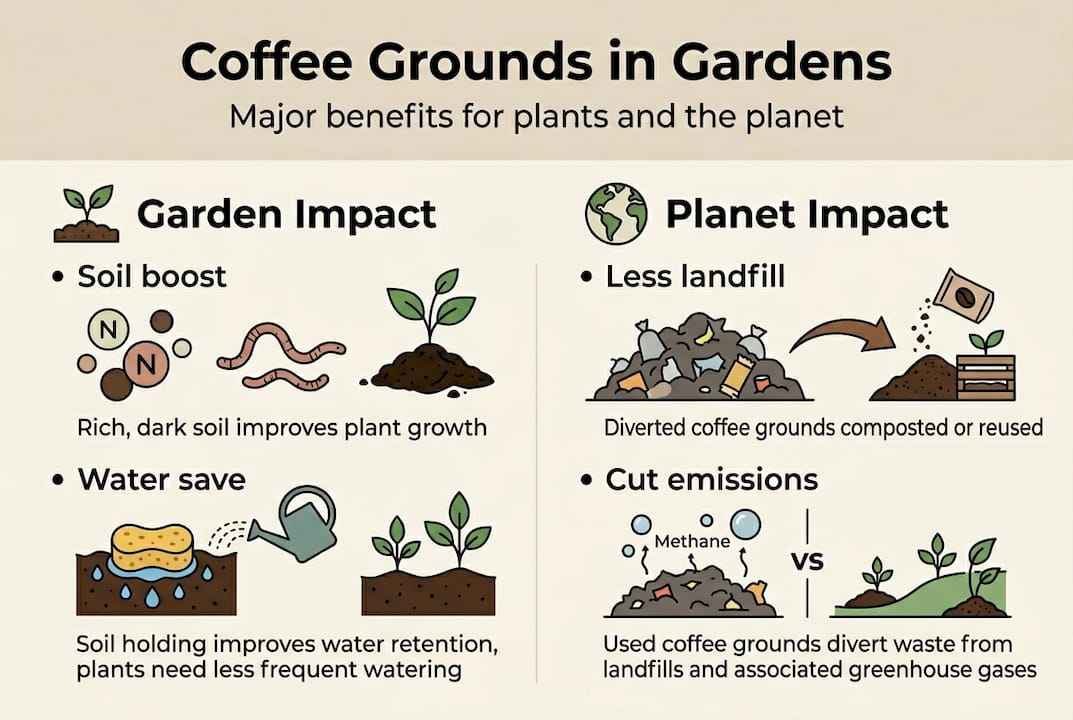
The 2% caffeine concentration is also associated with improved drought tolerance in plants grown in enriched compost, suggesting grounds contribute to resilience as well as nutrition.
Here are further uses worth knowing:
- Natural deodoriser: Dry grounds absorb odours in fridges, bins, and shoes. Place in a small open container and replace weekly.
- DIY skin scrub: Mixed with a little coconut oil, grounds make an effective exfoliating scrub. Simple and low cost.
- Worm attractor: Worms are drawn to coffee grounds in compost, which speeds up decomposition and improves soil aeration.
- Cat deterrent: Scattered around garden beds, grounds can discourage cats from using the area as a toilet.
- Cleaning abrasive: Grounds can scrub stubborn residue from pots, pans, and garden tools without scratching surfaces.
One persistent myth worth addressing: coffee grounds are not a meaningful soil acidifier. The Royal Horticultural Society confirms that grounds are near-neutral in pH and will not significantly lower soil acidity. If you need to acidify soil for ericaceous plants like rhododendrons, use dedicated products rather than relying on grounds alone.
For those interested in reducing packaging waste alongside grounds waste, home compostable pods offer another avenue worth exploring.
A garden enthusiast’s take: The truths (and traps) of blooming coffee grounds
Coffee grounds in the garden are genuinely useful. They are also genuinely misunderstood, and that gap causes problems.
The biggest trap is treating grounds as a cure-all. They will not rescue poor soil on their own. They will not dramatically acidify a bed or replace a proper fertiliser programme. Used incorrectly, thick layers of raw grounds can actually set a garden back, forming a crust that blocks water and air from reaching roots.
The wins are real but modest. Composting grounds consistently over a season improves soil texture and microbial activity in ways you can see and feel. Slug barriers using dry grounds genuinely reduce pest pressure without chemicals. And the waste reduction aspect is straightforward: grounds that go into compost stay out of landfill.
The lesson from practical experience: when in doubt, compost first. Direct application is tempting because it feels immediate, but it carries more risk. Composting is slower and less dramatic, but it consistently delivers. Pairing this habit with thoughtful choices about recyclable coffee packaging insights rounds out a genuinely low-waste coffee routine.
Get more from your coffee and garden
If you are inspired to build a more sustainable coffee routine, The Coffee Factory makes it straightforward.

Browsing fresh ground coffee from the Devon-based roastery means a steady supply of quality grounds ready for composting after every brew. A coffee subscription keeps that supply consistent, so your compost heap never runs short. For guidance on getting the most from each bag, the coffee brewing guide covers methods that minimise waste and maximise flavour. Free shipping on coffee orders over 1kg makes it easy to stock up and stay sustainable without extra cost.
Frequently asked questions
Is it safe to put coffee grounds directly on all garden plants?
It is safest to compost coffee grounds first. Raw grounds can suppress seedling germination and form a waterproof crust that harms roots when applied in thick layers.
How much coffee grounds should I add to compost?
Keep grounds below 20 to 25% of the total compost pile volume to maintain a healthy balance and prevent crusting or slow decomposition.
Do coffee grounds make soil more acidic?
No. Coffee grounds have a near-neutral pH of around 6.5 to 6.8 and will not significantly acidify UK garden soil, contrary to popular belief.
Are coffee grounds an effective way to control slugs and snails?
Yes. A 1 to 2% caffeine solution kills up to 95% of slugs and snails, and dry grounds used as a physical barrier around plants provide effective chemical-free deterrence.