

Why coffee beans are roasted: flavour science explained
Most coffee lovers obsess over origin. Ethiopian naturals, Colombian washed, Guatemalan highlands. The bean's birthplace gets all the glory. But here's the truth: a green coffee bean, however exotic its provenance, is dense, grassy, and completely undrinkable. It's the roasting process that transforms it into the aromatic, complex cup you reach for every morning. Understanding what happens inside the roaster doesn't just satisfy curiosity. It changes how you choose beans, how you brew, and ultimately how much pleasure you get from every single cup.
Table of Contents
- What happens during coffee roasting?
- Why roast? Transforming green beans into aromatic coffee
- A closer look: coffee roasting phases and what they mean for your cup
- Avoiding roast defects: common mistakes and expert advice
- Roasting methods: drum vs air for home and beyond
- Bringing it home: how to use roast knowledge for better brews
- Take your coffee experience further with expertly roasted beans
- Frequently asked questions
Key Takeaways
| Point | Details |
|---|---|
| Roasting unlocks flavour | Coffee beans develop their aroma and taste only through careful roasting. |
| Each phase matters | Every roasting stage, from drying to development, impacts the final cup. |
| Defects are avoidable | With proper control, home baristas can spot and prevent roasting mistakes. |
| Match method to taste | Choosing between drum and air roasting lets you tailor your coffee to your brew and flavour preferences. |
| Apply and experiment | Use roasting knowledge to select beans and brew styles that bring out the best in your cup. |
What happens during coffee roasting?
Roasting is not simply applying heat to a bean. It's a carefully managed sequence of chemical and physical changes, each one building on the last to create the flavour and aroma we associate with great coffee.
The process unfolds in distinct stages:
- Drying phase (roughly 6 to 8 minutes): The bean enters the roaster holding 10 to 12% moisture. Heat drives that moisture out, dropping it close to zero. The bean turns from green to yellow and begins to smell faintly of hay or toast.
- Maillard reaction (begins around 150°C): Sugars and amino acids react to produce over 500 aroma compounds, creating the nutty, toasted, and caramelised notes that define coffee's character.
- First crack (approximately 196 to 205°C): The bean expands rapidly, releasing built-up steam and CO₂ with an audible crack. This marks the entry into drinkable territory.
- Development phase: The window after first crack where the roaster controls how much complexity, sweetness, and acidity develops. Timing here is everything.
- Second crack (optional, around 225°C+): For darker roasts, a second crack signals further cell breakdown, producing bolder, more bitter profiles.
“The Maillard reaction alone generates hundreds of volatile compounds that give roasted coffee its signature aroma. Without it, you'd have little more than hot water with a grassy tinge.”
These changes directly shape coffee body and flavour. A rushed drying phase leads to uneven development. A stalled Maillard reaction produces flat, baked notes. Every second inside the drum matters. When choosing coffee beans, understanding these phases helps you read roast descriptions with real confidence rather than guesswork. It's also worth noting that the bean's physical structure changes dramatically: it expands by up to 60% in volume while losing 15 to 20% of its mass through moisture and gas loss, which is why freshly roasted beans feel lighter than green ones. You can explore how coffee drying methods at origin also influence what the roaster has to work with.
Why roast? Transforming green beans into aromatic coffee
A green coffee bean is essentially a seed. It's hard, dense, and if you tried to brew it, you'd get a thin, grassy liquid with almost no resemblance to coffee. Roasting is not optional. It's the step that makes coffee what it is.
Here's what roasting actually unlocks:
- Aroma: The creation of 500+ aroma compounds during the Maillard reaction is what fills your kitchen with that unmistakable coffee scent.
- Sweetness: Caramelisation of natural sugars produces the sweetness that balances acidity in a well-roasted bean.
- Body: Cell walls break down and oils are released, contributing to the coffee body that makes espresso feel rich and satisfying.
- Acidity: Properly developed roasts retain bright, pleasant acidity. Overdone roasts lose it entirely.
- Drinkability: The structural changes make the bean soluble, meaning hot water can actually extract flavour from it.
Roast level is where personal taste really enters the picture. Light roast coffee preserves more of the bean's origin character, with floral and fruity notes front and centre. Medium roasts balance origin and roast character, offering sweetness and body without bitterness. Dark roast coffee pushes into bold, smoky territory where roast flavour dominates. None of these is objectively better. They suit different brewing methods and different palates.
Pro Tip: If you're new to specialty coffee, start with a medium roast from a single origin. It gives you enough complexity to be interesting without the intensity that can overwhelm beginners. From there, work lighter or darker based on what you enjoy.
The key insight is that fresh roasted beans at any roast level will outperform stale beans every time. Freshness matters as much as the roast itself.
A closer look: coffee roasting phases and what they mean for your cup
Knowing the stages is one thing. Understanding the benchmarks that separate a skilled roast from a mediocre one is where things get genuinely useful for home baristas.
| Roasting phase | Temperature range | Physical changes | Cup outcome |
|---|---|---|---|
| Drying | 100 to 150°C | Colour shifts yellow, moisture leaves | Foundation for even development |
| Maillard reaction | 150 to 196°C | Colour deepens to light brown, aroma builds | Nutty, toasted, caramelised notes |
| First crack | 196 to 205°C | Bean expands, audible crack | Entry point for drinkable coffee |
| Development | 196 to 225°C | Colour continues to deepen | Sweetness, acidity, complexity |
| Second crack | 225°C+ | Oils appear on surface, darker colour | Bold, bitter, smoky character |
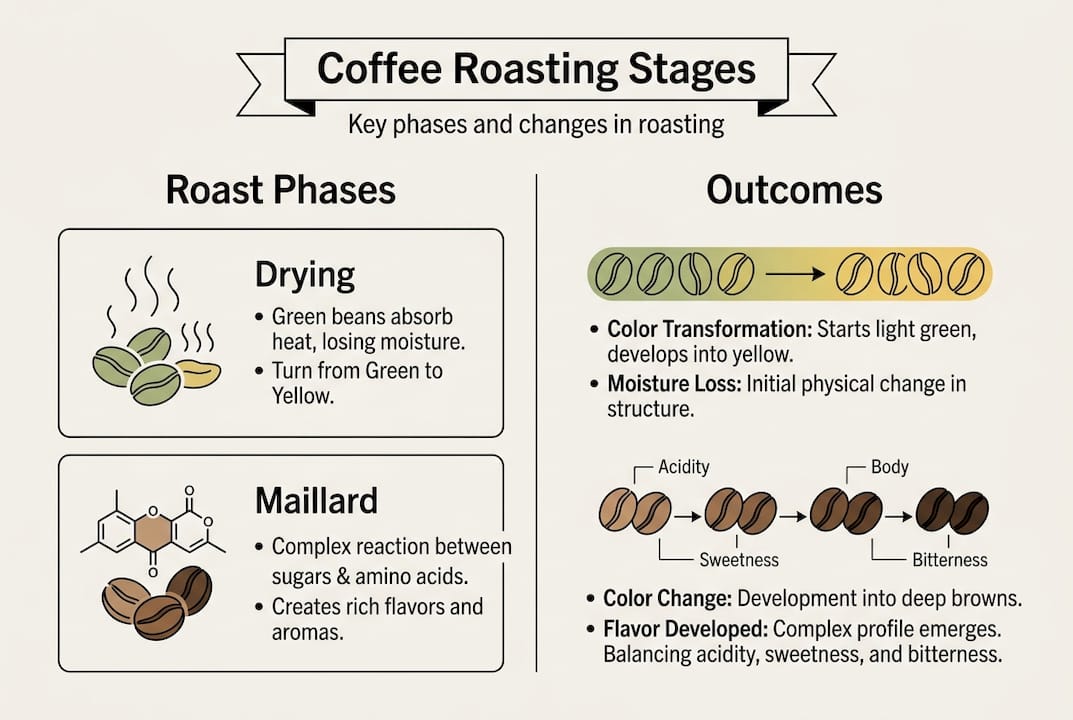
Expert benchmarks suggest the development time after first crack should represent 5 to 15% of the total roast time. For a light roast, that might be 5 to 8 minutes post-crack. For a medium roast, 8 to 12 minutes. The Rate of Rise (RoR), which measures how quickly temperature climbs, also matters enormously. A fast initial RoR of around 10°C per 30 seconds is common in well-managed profiles.
As a home barista watching a roast (whether on a home roaster or simply learning to read your beans), here's what to pay attention to:
- The colour shift from green to yellow to tan to brown
- The smell moving from grassy to bready to caramelised
- The sound of first crack, a series of popping sounds similar to popcorn
- The surface of the bean becoming smoother as it expands
- Any oiliness appearing on the surface, which signals you're approaching or past second crack
These sensory cues are your real-time feedback. Pair this knowledge with a quick brew guide to understand how roast level affects extraction. And once you've got your beans, knowing how to store roasted beans properly ensures all that roasting effort isn't wasted.
Avoiding roast defects: common mistakes and expert advice
Even experienced roasters encounter defects. Knowing what they are and why they happen helps you recognise a poorly roasted bag before you've wasted a full brew on it.
| Defect | Cause | How it tastes |
|---|---|---|
| Scorching | Excessive heat at the start of roasting | Harsh, acrid, burnt patches on the bean |
| Baking | Stalled Rate of Rise during development | Flat, dull, cardboard-like |
| Underdevelopment | Roast ended too early | Grassy, sour, thin body |
| Overdevelopment | Too long in development phase | Bitter, ashy, loss of origin character |
| Tipping | Uneven heat causing bean ends to burn | Bitter spots, uneven extraction |
Controlled charge temperature between 175 and 205°C, combined with proper airflow management, prevents most of these issues. Scorching happens when beans hit a drum that's too hot. Baking happens when the roaster loses momentum and the temperature plateaus too early.
Pro Tip: When buying pre-roasted coffee, open the bag and smell it before brewing. A grassy or sour smell suggests underdevelopment. A harsh, acrid smell points to scorching. A flat, papery smell means baking. Your nose is a reliable quality check.
Warning signs to watch for:
- A noticeably grassy or vegetal aroma from the bag
- Dark patches or uneven colouring on individual beans
- A dull, flat taste with no sweetness or brightness
- Excessive bitterness that lingers unpleasantly
When choosing beans wisely from a reputable roaster, these defects should be rare. And proper bean storage after purchase ensures the roaster's hard work isn't undone by exposure to air, light, or moisture.
Roasting methods: drum vs air for home and beyond
Not all roasters work the same way. The two dominant methods, drum and air (also called fluid-bed) roasting, produce noticeably different results in the cup.
Drum roasting:
- Uses conduction, convection, and radiant heat
- Typical roast time: 12 to 20 minutes
- Produces fuller body and sweetness
- Higher risk of scorching if not managed carefully
- Favoured for espresso and milk-based drinks
Air (fluid-bed) roasting:
- Uses convection heat only, with hot air circulating around the beans
- Typical roast time: 6 to 10 minutes
- Produces cleaner, brighter, more uniform results
- Excellent for highlighting origin character
- Well-suited to filter and pour-over brewing
“There's no universally superior roasting method. The best method is the one that brings out the qualities you personally value in a cup. Drum roasting builds body and warmth. Air roasting reveals clarity and origin. Both, done well, produce exceptional coffee.”
For home roasting techniques, air roasters tend to be more forgiving and easier to control. If you're passionate about espresso at home, a drum-roasted medium to dark bean will typically give you the body and sweetness that pulls well under pressure. Explore brewing guides to match your chosen method with the right extraction approach.
Bringing it home: how to use roast knowledge for better brews
All of this knowledge is only useful if it changes what you do at home. Here's how to put it into practice.
- For espresso: Choose a medium to dark drum-roasted bean. The fuller body and lower acidity suit the intensity of espresso extraction. Rest the beans for 7 to 14 days post-roast before brewing.
- For filter or pour-over: A light to medium roast, ideally air-roasted, will highlight floral and fruity origin notes. Brew within 2 to 6 weeks of roast date for peak flavour.
- For French press: A medium to dark roast works beautifully here. The immersion method extracts body and oils effectively, complementing a fuller roast profile.
- For AeroPress: Versatile. Try a medium roast first, then experiment lighter or darker depending on whether you prefer brightness or body.
Pro Tip: Keep a simple brew log. Note the roast date, roast level, grind size, brew time, and your tasting notes. After a few weeks, patterns emerge. You'll start to see exactly which combinations produce the cup you love most.
Listening for cracks and logging profiles is what separates intuitive brewers from those who just follow recipes. Defects you now recognise, grassy notes, flat taste, harsh bitterness, become useful signals rather than vague disappointments. Use your brew guide alongside this knowledge, and pair it with a deeper understanding of coffee flavour to keep refining your approach.
Take your coffee experience further with expertly roasted beans
You now understand what separates a brilliantly roasted bean from a disappointing one. That knowledge deserves to be matched with coffee that's actually been roasted with care. At The Coffee Factory, every bag is roasted fresh at our Devon roastery and dispatched quickly so it arrives at its flavour peak.

Whether you're drawn to the brightness of light roast coffee or the richness of a darker blend, our range is built around the same roasting principles you've just explored. You can also browse our fresh ground coffee selection if you're not yet grinding at home. And when you're ready to dial in your brewing, our coffee brewing guide walks you through extraction for every method. Great roasting deserves great brewing. We're here to help with both.
Frequently asked questions
What would happen if I brewed unroasted green coffee beans?
Green beans are dense and grassy, producing a thin, flavourless liquid with almost no aroma. The Maillard reaction and caramelisation that create coffee's character simply haven't occurred.
How can I spot burnt or underdeveloped coffee beans?
Burnt beans show dark patches and taste harshly bitter; underdeveloped beans look pale and taste grassy or sour. Both are recognisable roast defects that a reputable roaster should avoid.
Does roast level affect caffeine content in coffee?
Lighter roasts retain marginally more caffeine than darker ones because roasting influences bean mass through moisture loss, but the practical difference per brewed cup is minimal.
Which roasting method is best for home use: drum or air?
Air roasting is generally more forgiving for home users and produces clean, bright results. Drum and air roasting each suit different flavour goals, so the best choice depends on whether you prioritise body or clarity.
How do I avoid roasting defects when making coffee at home?
Monitor heat carefully, maintain consistent airflow, and never rush or stall any phase. Careful phase monitoring and listening for first crack are the most reliable tools available to home roasters.
Recommended
- Origin coffee beans: flavours, types and heritage 2026
- How to choose coffee beans: 73% prefer fresh roasted
- What is coffee body? understanding its role in flavour
- Buy Unique Coffee Varieties online at Coffee Factory | Fast Delivery
- Coffee Drying Methods: How Processing Shapes Flavour - ADIRA Coffee
- Artisan coffee roasted in Devon
- Meet our vintage Probat roasters
- Why coffee degassing matters: science and steps after roasting
- Coffee roast levels: how they shape flavour and brewing