

How single origin coffee transforms espresso flavour
TL;DR:
- Single origin coffee offers distinct flavours with transparent sourcing from specific farms or regions.
- Regional characteristics influence flavour profiles, acidity, and body in single origin espresso.
- Choosing between single origin and blends depends on preference for variety, consistency, and ethical considerations.
Most UK espresso drinkers assume that blends are the only serious option for a proper shot. That assumption is worth questioning. Single origin coffees, sourced from one farm or defined region, are gaining real traction among enthusiasts who want more from their espresso. The flavour profiles are distinct, the sourcing stories are traceable, and the experience is often surprising. This article breaks down what single origin coffee actually means for espresso, how it shapes what you taste in the cup, and how it compares to the blends you already know.
Table of Contents
- What is single origin coffee and why does it matter for espresso?
- How single origin shapes espresso flavour profiles
- Single origin vs espresso blends: a direct comparison
- Traceability, sustainability, and ethical sourcing in single origin espresso
- Why single origin espresso is not just a trend
- Experience single origin excellence at home
- Frequently asked questions
Key Takeaways
| Point | Details |
|---|---|
| Unique flavour profiles | Single origin espresso delivers distinctive taste experiences that highlight a coffee’s place of origin. |
| Traceability and ethics | Choosing single origin supports transparent sourcing and often more sustainable, farmer-focused practices. |
| When to choose blends | Espresso blends provide reliability and balance, ideal for everyday or café use, while single origin suits those seeking variety. |
| Practical application | Explore different single origins to discover new favourites and broaden your espresso enjoyment at home. |
What is single origin coffee and why does it matter for espresso?
Single origin coffee comes from one specific place. That might be a single farm, a cooperative within a region, or a defined growing area within one country. The key point is traceability. You know exactly where the beans grew, who tended them, and often how they were processed. This is fundamentally different from a blend, which combines beans from multiple origins to achieve a balanced and consistent flavour.
For espresso drinkers, this distinction matters more than it might first appear. Blends are engineered for repeatability. A good blend tastes the same shot after shot, season after season, which is why most cafés rely on them. Single origin espresso, by contrast, can shift slightly between harvests. The brightness of an Ethiopian lot from one year may differ from the next. That variability is part of the appeal for enthusiasts, though it does require a willingness to adjust.
Traceability also connects to ethical sourcing. When you buy single origin coffee beans, you can often trace your purchase back to a specific producer. This transparency supports fairer pricing and more accountable supply chains. UK roasters increasingly highlight this, with traceability and regenerative sourcing becoming central talking points in how serious roasters communicate value to customers.
Reading up on an origin coffee beans guide can also help you understand how geography shapes cup character before you buy.
Key benefits of single origin for espresso drinkers:
- Clear flavour identity tied to a specific place and process
- Greater transparency around farming and sourcing practices
- Seasonal variety that keeps the experience fresh
- Supports direct relationships between roasters and producers
- Allows you to develop a more nuanced palate over time
Pro Tip: Look for roasters who publish detailed origin information, including farm name, processing method, and harvest date. This level of detail signals a commitment to quality and makes it easier to match beans to your preferred flavour style.
How single origin shapes espresso flavour profiles
The region where coffee is grown has a direct and measurable effect on what ends up in your cup. Soil composition, altitude, rainfall, and processing method all interact to produce distinct flavour compounds. When you pull a single origin espresso, those regional characteristics come forward without the smoothing effect of a blend.

UK specialty coffee trends show growing interest in region-specific flavours, with enthusiasts actively seeking out the floral notes of East African beans or the chocolatey depth of South American lots. Understanding these regional signatures helps you choose the right bean for your brewing setup and taste preference.
| Origin region | Typical flavour notes | Acidity | Body |
|---|---|---|---|
| Ethiopia | Floral, citrus, blueberry | High | Light to medium |
| Brazil | Chocolate, nuts, caramel | Low | Full |
| Colombia | Red fruit, caramel, balanced | Medium | Medium |
| Kenya | Blackcurrant, tomato, bright | High | Medium |
| Guatemala | Dark chocolate, spice, toffee | Medium | Full |
These profiles behave differently under espresso extraction. High-acidity beans like Ethiopian or Kenyan lots can produce very bright, almost sharp shots if not dialled in carefully. Lower-acidity beans from Brazil tend to extract more smoothly and suit milk-based drinks well.
What to expect from single origin espresso by region:
- Ethiopian: Floral and citrus notes, best as straight espresso or with light milk
- Brazilian: Nutty and chocolatey, reliable for flat whites and cappuccinos
- Kenyan: Intensely fruity, works well as a short black for adventurous palates
- Colombian: Balanced and approachable, good for those new to single origins
- Guatemalan: Rich and spiced, pairs well with darker chocolates
This contrasts with blend-based espresso, where the aim is harmony across all those characteristics rather than showcasing any single one. You can discover single origin flavours across multiple regions to find what suits your palate best.
Pro Tip: Adjust your grind size when switching between single origins. A brighter, high-acidity bean often benefits from a slightly coarser grind to reduce sharpness, while a denser, low-acidity bean may need a finer setting to extract full sweetness.
Single origin vs espresso blends: a direct comparison
Both single origin and blended espresso have genuine strengths. The choice between them comes down to what you want from your coffee experience on any given day.
| Feature | Single origin | Blend |
|---|---|---|
| Flavour complexity | High, region-specific | Balanced, engineered |
| Consistency | Variable by harvest | Reliable year-round |
| Traceability | Clear and specific | Often partial |
| Price | Typically higher | Generally more accessible |
| Best use | Straight espresso, exploration | Milk drinks, daily use |
The case for espresso blend options is strong for everyday drinking. Blends are designed to perform consistently across a range of espresso machines and brewing variables. They suit high-volume environments where reproducibility matters more than uniqueness. As blends remain preferred for daily consistency in many UK cafés, they serve a clear and practical purpose.
When to choose single origin:
- You want to understand how a specific region tastes
- You are experimenting with straight espresso or lungo
- You are buying as a gift for a coffee enthusiast
- You want to support traceable, ethically sourced coffee
- You are in the mood to slow down and pay attention to flavour
When to choose a blend:
- You need consistency across multiple shots
- You are making milk-based drinks regularly
- You want a reliable daily drinker without adjustment
- You are serving guests with varied preferences
“Single origins reward curiosity. Blends reward reliability. The best home barista knows when to reach for each.”
A useful approach from the premium coffee guide is to keep both on hand, using a blend for weekday mornings and a single origin for more deliberate weekend sessions.
Traceability, sustainability, and ethical sourcing in single origin espresso
Single origin coffee offers something that blends rarely can: a direct line between your cup and the farm where the beans grew. This matters to a growing number of UK coffee drinkers who want to know more about the supply chain behind their daily habit.
Knowing who grew your coffee and how it was farmed is not just a marketing point. It enables accountability. When a roaster publishes specific farm details, processing methods, and the prices paid to producers, it becomes much harder to obscure unfair practices. Traceability and regenerative sourcing are now central values for the most respected UK specialty roasters, reflecting a broader shift in how consumers engage with food and drink provenance.
Demand for sustainably sourced coffee is also rising. Organic dark roast coffee and other certified options reflect a market that increasingly expects environmental accountability alongside flavour quality. This demand is shaping how importers and roasters communicate with buyers.
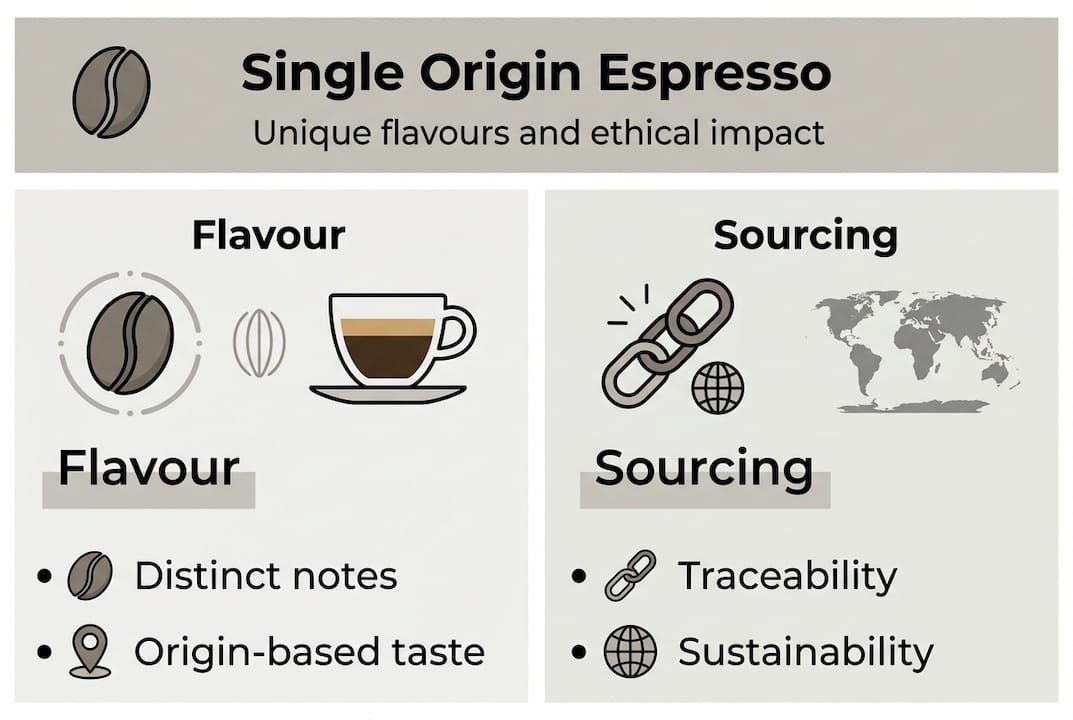
When buying single origin espresso, checking the sourcing credentials is straightforward if you know what to look for.
Ways to verify ethical sourcing:
- Look for named farms or cooperatives, not just country of origin
- Check for certifications such as Fairtrade, Rainforest Alliance, or Direct Trade
- Read the roaster’s sourcing notes for mention of premiums paid to producers
- Choose roasters who publish information about their supply chain partners
- Refer to a sustainable coffee guide for deeper context on what these labels mean
Single origin also supports regenerative agriculture more directly. When a roaster buys from one farm consistently and pays above commodity prices, that farmer can invest in soil health, shade-growing, and water conservation. You can read more about UK coffee supply transparency to understand how these decisions ripple through the supply chain.
Key figure: The global market for sustainably certified coffee grew by over 10% between 2022 and 2025, driven significantly by UK and European consumer demand for traceability.
Why single origin espresso is not just a trend
It would be easy to dismiss single origin espresso as a niche enthusiasm. That would miss what is actually happening in UK coffee culture. The shift towards single origin is not driven by novelty. It reflects a broader change in how people relate to what they consume.
Enthusiasts who invest time in understanding single origin are developing something valuable: a more informed palate and a more conscious relationship with their coffee. They are asking where it came from, who grew it, and why it tastes the way it does. Those are not trivial questions.
The Coffee Factory’s Roasters Club is one example of how this curiosity can be structured into a regular, rewarding habit. Seasoned enthusiasts know that the most memorable espresso shots are often tied to a specific origin story, not just an abstract flavour. That connection between place, producer, and cup is what makes single origin espresso worth exploring seriously, not as a replacement for blends, but as a genuine addition to your coffee repertoire.
Experience single origin excellence at home
Knowing the theory is one thing. Tasting it is another.
The Coffee Factory offers a curated range of freshly roasted shop single origin beans, sourced from distinct origins and roasted in small batches at the Devon roastery. Every order is dispatched fresh, so the flavour notes you read about on the label are the ones that actually reach your cup. For those who want to explore more systematically, coffee subscriptions allow you to receive rotating single origin selections, making it straightforward to build knowledge and compare profiles over time. Free shipping is available on orders over £20.
Frequently asked questions
What makes single origin coffee different from blends in espresso?
Single origin espresso showcases the unique flavours from one farm or region, while blends offer a balanced and consistent taste achieved by combining several origins. The main difference is traceability and flavour specificity.
Is single origin espresso always better than blends?
Not always. Single origin offers variety and traceability, but blends provide consistency that is especially valuable in high-volume cafés or for reliable daily drinking at home.
How can I identify a high-quality single origin coffee for espresso?
Look for clear details on the farm or region, published tasting notes, and a roasting date. Roasters who share this level of detail demonstrate a genuine commitment to traceability and quality.
Does single origin espresso work well with milk drinks?
Yes, certain single origins add bright and distinctive notes to milk-based drinks, though high-acidity varieties from East Africa may shine better as straight espresso without milk diluting the character.
Why do many coffee roasters highlight single origin traceability?
Traceability means buyers know exactly where beans originate, supporting transparency in the supply chain and regenerative sourcing practices that benefit farmers and the environment.
Recommended
- Discover Unique Flavours with Single Origin Coffee | Fast UK delivery
- Elevate Your Home Espresso: Why the Roasters Club Duo Offers the Best
- Single Origin Coffee Beans – Freshly Roasted & Traceable
- Origin coffee beans: flavours, types and heritage 2026
- Single origin coffee: taste, quality, and story in 2026 – Z’s Coffee