

Dark roast coffee: flavour, benefits & brewing guide
- Dark roast coffee has a complex smoky, chocolatey profile formed by high-temperature roasting.
- It offers low acidity, full body, and pairs well with bold foods and milk.
- Proper brewing variables like grind size and temperature enhance its rich, smooth flavour.
Dark roast coffee carries a reputation for being simply strong and bitter. That view is widely held, but it misses a great deal. The roasting process that produces those deep brown, oily beans also creates a layered profile of smoky, chocolatey, and nutty notes that lighter roasts cannot replicate. Understanding what actually happens during a dark roast, how it compares to other roast levels, and how to brew it properly at home can transform your daily cup. This guide covers all of it, from the science of the roast to practical brewing parameters you can use straight away.
Table of Contents
- What makes dark roast coffee unique?
- Comparing dark, medium, and light roast coffees
- Why choose dark roast? Benefits for coffee lovers
- How to brew the perfect dark roast at home
- Why dark roast's reputation deserves a rethink
- Find your perfect dark roast coffee
- Frequently asked questions
Key Takeaways
| Point | Details |
|---|---|
| Bold flavour profile | Dark roast coffee offers a rich, smoky flavour and low acidity compared to lighter roasts. |
| Best for robust brews | French press, espresso, and moka pot highlight dark roast's depth at home. |
| Not always higher caffeine | Despite popular belief, dark roast can contain slightly less caffeine than lighter styles. |
| Proper brewing matters | Simple changes to grind, water temperature, and timing make all the difference to your cup. |
What makes dark roast coffee unique?
Dark roast coffee starts with the same green beans used for any other roast level. The difference lies in how long those beans spend in the roaster and how high the temperature climbs. Roasters typically take dark roast beans to internal temperatures between 225°C and 245°C, well past the point known as the second crack. At that stage, the bean's cellular structure breaks down significantly, driving off moisture and volatile acids.
The result is immediately visible. Dark roast coffee is identified by its dark brown colour, oily surface, and bold, smoky profile. That surface oil is not a flaw. It is the bean's natural oils migrating outward as the cell walls weaken, and it contributes to the thick, smooth mouthfeel many drinkers enjoy.
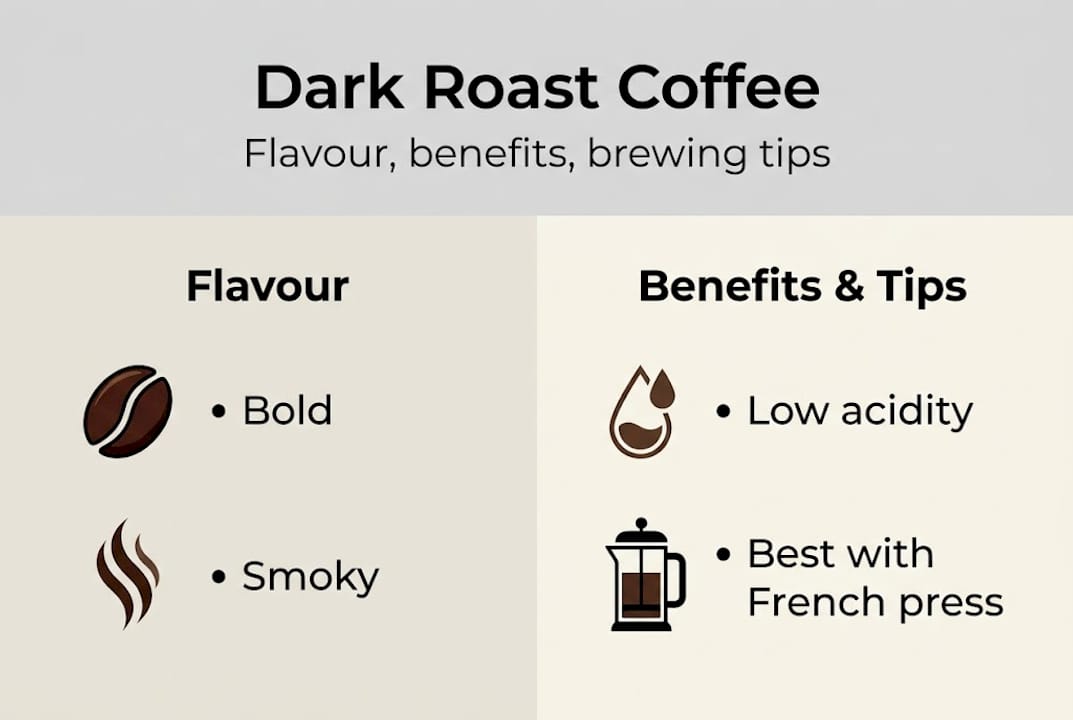
The aroma is equally distinctive. Expect smoky, roasted, and sometimes spicy notes on the nose, often with a background of dark chocolate or caramel. These are not the fruity or floral aromatics you find in lighter roasts. Understanding coffee roast levels helps clarify why: the longer the roast, the more the bean's original origin character gives way to roast-driven flavours shaped by heat and chemical reactions.
Key characteristics of dark roast coffee:
- Colour: Deep brown to near-black
- Surface: Visibly oily sheen
- Acidity: Low, making it gentler on the stomach
- Body: Full and heavy
- Flavour notes: Smoky, dark chocolate, roasted nuts, caramel
- Aroma: Bold, roasted, sometimes spicy
The flavour science explained behind roasting shows that Maillard reactions and caramelisation are responsible for these characteristics. Both processes accelerate at higher temperatures, which is why dark roast flavours are so pronounced.
"The roast level is one of the most powerful variables in shaping what ends up in your cup. Dark roast prioritises body and boldness over brightness and complexity."
Pro Tip: Buy freshly roasted dark roast beans and use them within four weeks of the roast date. Oily beans go stale faster than lighter roasts, and stale dark roast tastes flat and harsh rather than bold and smooth.
Comparing dark, medium, and light roast coffees
Having defined dark roast coffee, it is helpful to compare it with other roasting styles. The differences are not just about colour. Acidity, body, caffeine content, and brewing suitability all shift as roast level changes.
Light roast coffee preserves more of the bean's natural acids and complex flavours, while dark roast develops robust, straightforward notes. Medium roast coffee sits between the two, offering a balance of brightness and body that suits a wide range of drinkers.
| Feature | Light roast | Medium roast | Dark roast |
|---|---|---|---|
| Colour | Light brown | Medium brown | Dark brown to black |
| Acidity | High | Moderate | Low |
| Body | Light | Medium | Full |
| Flavour | Fruity, floral, bright | Balanced, nutty, sweet | Smoky, chocolatey, bold |
| Caffeine (by volume) | Slightly higher | Moderate | Slightly lower |
| Surface oil | None | Minimal | Pronounced |
The caffeine point surprises many people. Because dark roast beans are denser with less moisture, you often use more beans by weight for the same volume, which can offset the small caffeine difference. The practical gap is minor.
Choosing the right roast for your brew method matters. Here is a quick guide:
- Espresso: Dark or medium roast works well; dark roast produces a thick crema and bold shot
- French press: Dark roast is ideal; the full immersion method complements its heavy body
- Filter or pour-over: Medium or light roast tends to shine here, preserving delicate notes
- Moka pot: Dark roast suits the intense extraction of a moka pot
- Pods or capsules: Dark roast pods are widely available and consistent for quick brewing
If you find light roast too sharp or acidic, dark roast is the natural move. Its low acidity and bold flavour make it approachable, particularly for those who drink coffee with milk.
Why choose dark roast? Benefits for coffee lovers
Once you know how roast profiles differ, you can choose the one that matches your taste and needs. Dark roast has several practical advantages worth knowing.
- Low acidity. Ideal for anyone with a sensitive stomach or acid reflux. The extended roasting process breaks down chlorogenic acids, making dark roast easier to digest.
- Bold, consistent flavour. The roast-driven profile is predictable and satisfying, delivering the same character cup after cup regardless of the bean's origin.
- Versatile brewing compatibility. Dark roast performs reliably across espresso, French press, moka pot, and pod machines.
- Pairs well with food. The robust flavour stands up to strong foods without being overwhelmed.
- Smooth mouthfeel. Surface oils contribute to a thick, coating texture that many drinkers find satisfying.
Dark roast coffee often contains slightly less caffeine per volume than lighter roasts, but its robust flavour appeals to those wanting a bold cup. The difference is small enough that most drinkers will not notice it in practice.
Exploring the rich dark roast selection available from a quality roastery gives you access to single-origin and blended options, each with its own character within the dark roast spectrum. Some lean towards bitter dark chocolate; others offer a sweeter, caramel-forward finish.
Pro Tip: Pair dark roast coffee with foods that share its flavour register. Dark chocolate, aged cheese, smoked meats, and walnut cake all complement the smoky, roasted notes without clashing. For those using pod machines, strong coffee pods offer a consistent dark roast experience with minimal effort.
How to brew the perfect dark roast at home
Armed with your choice of dark roast, here is how to brew it properly in your own kitchen. The key variables are grind size, water temperature, and brew time. Getting these right makes the difference between a bitter, flat cup and a smooth, bold one.
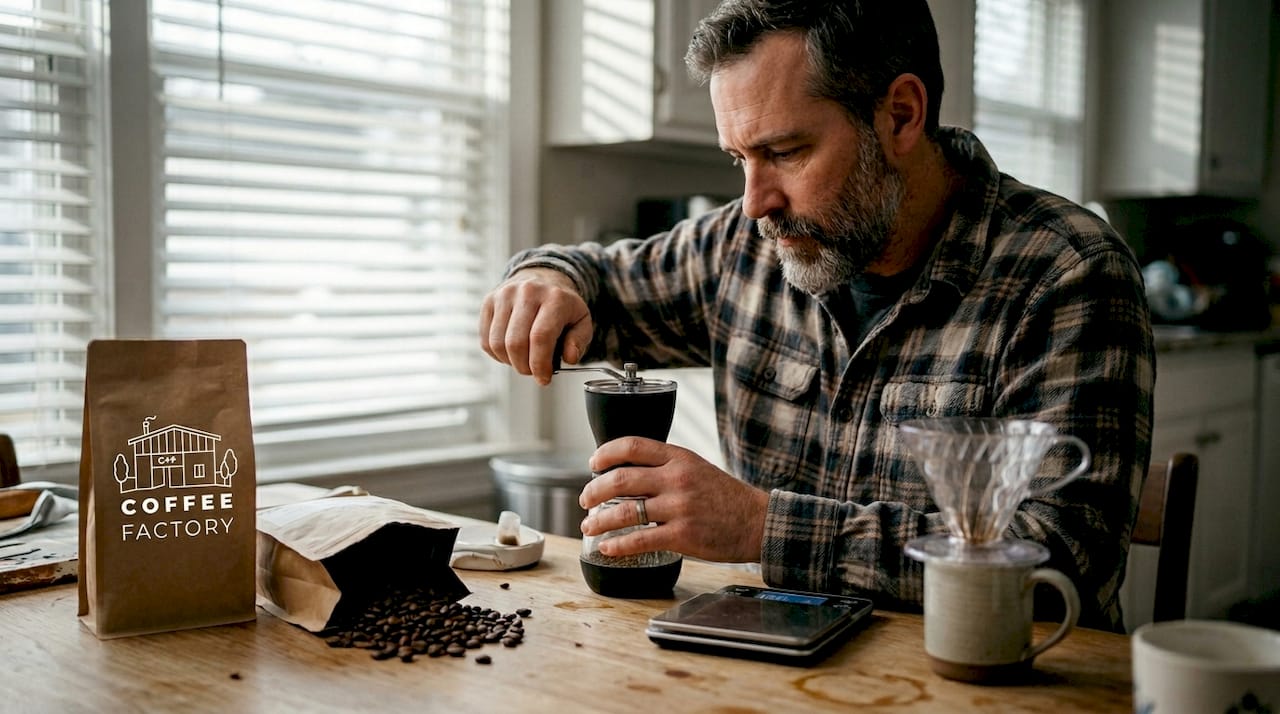
Adapting grind size, water temperature, and brew time can maximise flavour extraction from dark roast coffee. Each brewing method has its own ideal parameters.
| Brew method | Grind size | Water temperature | Brew time |
|---|---|---|---|
| French press | Coarse | 93°C | 4 minutes |
| Espresso | Fine | 90 to 92°C | 25 to 30 seconds |
| Filter/pour-over | Medium | 91°C | 3 to 4 minutes |
| Moka pot | Fine to medium | Off the boil | 5 to 7 minutes |
Step-by-step approach for French press, the most forgiving method for dark roast:
- Grind beans coarsely just before brewing
- Add 60g of coffee per litre of water
- Pour water at 93°C, not boiling
- Stir gently and place the lid on without pressing
- Wait 4 minutes, then press slowly and pour immediately
For espresso, use a slightly lower temperature than you might for lighter roasts. Dark roast extracts quickly, and water that is too hot will push bitterness forward. Around 90 to 92°C is the target.
Pro Tip: Use filtered water if your tap water is hard. Mineral-heavy water can amplify bitterness in dark roast. Store your beans in an airtight container away from light and heat, not in the fridge.
For more detailed guidance on each method, the quick brew advice covers parameters for a range of equipment. If you want to understand specialty roasting and how roastery decisions affect your cup, that context helps you make better choices when buying.
Common mistakes to avoid:
- Using water that is too hot (above 96°C)
- Over-extracting by brewing too long
- Using pre-ground coffee that has gone stale
- Storing beans in the freezer and thawing repeatedly
Why dark roast's reputation deserves a rethink
Dark roast is often dismissed in specialty coffee circles as the choice for people who do not know better. That view is too simple. The assumption is that dark roast masks poor-quality beans under heavy roasting, and while that has been true in some commercial contexts, it does not define the category.
A skilled roaster working with quality beans can produce a dark roast that has genuine complexity. The smoky, chocolatey character is not a cover-up. It is a deliberate outcome of craft. The flavour science behind roasting shows that the Maillard reactions at higher temperatures create distinct compounds that simply do not exist in lighter roasts. That is not inferior. It is different.
British coffee culture has shifted noticeably towards lighter, more acidic profiles in recent years. That shift has value, but it has also created an unwarranted stigma around dark roast. Many experienced drinkers are returning to it, not out of nostalgia, but because a well-brewed dark roast offers something lighter roasts cannot: depth, warmth, and a satisfying body that holds up with milk or on its own. Dark roast deserves to be judged on its own terms.
Find your perfect dark roast coffee
Ready to put your knowledge into action? The Coffee Factory roasts fresh from their Devon roastery and ships directly to your door, so you receive beans at their best.
Browse dark roast coffee to find blends and single-origin options suited to your preferred brewing method. If you use a pod machine, convenient dark roast pods offer a consistent, bold cup with no fuss. For those looking to improve their home setup, the range of coffee accessories covers everything from grinders to brewing equipment. Free shipping applies on coffee orders over 1kg.
Frequently asked questions
Does dark roast coffee have more caffeine than light roast?
Dark roast coffee frequently contains less caffeine by volume compared to light roast, though the difference is minor and unlikely to be noticeable in everyday drinking.
What flavours can I expect from dark roast coffee?
Dark roast beans provide bold aroma, smooth mouthfeel, and deep chocolate notes, typically with low acidity and hints of smoke or roasted nuts.
Is dark roast coffee more bitter than other roasts?
Brewing technique affects bitterness perception in dark roast coffee; over-extraction or water that is too hot will increase bitterness, while correct parameters produce a smooth, bold cup.
What is the best way to brew dark roast coffee at home?
Adapting grind, water temperature, and time improves dark roast coffee brewing across all methods; French press, espresso, moka pot, and filter all work well with the right settings.
Recommended
- Coffee roast levels: how they shape flavour and brewing
- Why coffee beans are roasted: flavour science explained
- What is a roastery? Elevate your home coffee in 2026
- Buy Dark Roast Coffee – Bold, Rich & Smoky Flavour
- Coffee roasting guide: elevate your home brews like a pro
- Artisan coffee roasted in Devon
- Meet our vintage Probat roasters
- Why coffee degassing matters: science and steps after roasting
- Uncover Devon's Best Coffee: A Deep Dive into the Specialty Coffee Roasters You Can't Miss